
By Arianna Dillon
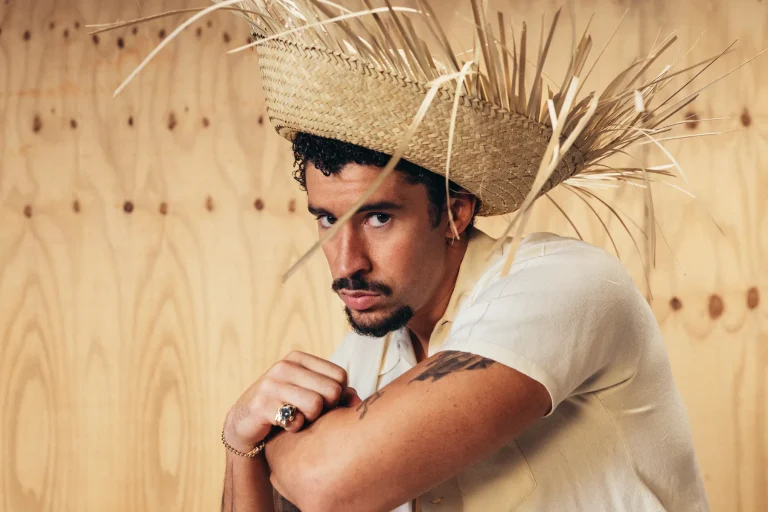
Throughout his career, Bad Bunny has never been shy about his Puerto Rican pride, and from the mascot of the album to the musical composition, his latest release is a statement-making love letter to the island. A new music style for him, DeBÍ TiRAR MáS FOToS (DTMF) has seen massive mainstream success, debuting at #2 and peaking at #1 on the Billboard 200 chart.
A carefully crafted album, DTMF dives deep into complex themes such as the effects of colonialism, government corruption, and a fight for cultural preservation. In the same way, it also highlights the beauty of being Puerto Rican, taking listeners on a musical journey through Puerto Rican culture, filled with overwhelming emotion, pride, love, regret, and nostalgia.
The album begins not in Puerto Rico, but in New York, with “NUEVAYoL”: a high-energy salsa-dembow track, sampling a 1975 classic “Un Verano en Nueva York” by El Gran Combo de Puerto Rico. Right off the bat, Bad Bunny connects classic Puerto Rican music with modern Latin hip-hop, creating a cultural experience that can appeal to all generations, from kids in the Bronx to older Puerto Ricans on the island.
The cultural influences in this album are already seen in this track, firstly in the title: as opposed to spelling it “Nueva York,” the spelling “Nueva Yol” mimics a Puerto Rican accent, where the “rk” can be dropped and replaced with an “l” sound. The music video also makes a statement.
Dropping on 4th of July, the music video features an impactful scene of Bad Bunny saluting the camera from inside the statue of liberty, which is draped in a Puerto Rican flag. This again unites those in the US and on the island, an unapologetic reminder of Puerto Ricans’ presence in the US. Beginning in New York sets the scene, taking listeners through the Puerto Rican neighborhoods of New York and into the island of Puerto Rico.
Making a jump down the tracklist, we get the fourteenth track: “LO QUE LE PASÓ A HAWAii” (which in English means “what happened to Hawaii”). Here, Bad Bunny shifts to a slower, more somber sound. And this track is just wow. It has a blend of traditional Puerto Rican music styles, layered with heavy sentimental lyrics. The emotional impact of the song is strong, and using traditional cultural icons like the jíbaro furthers the urgency Bad Bunny is trying to convey.
The track follows the story of Puerto Ricans who have been forced to leave the island because of government corruption, lamenting the effects of this migration and its seeming inevitability. At its heart, “LO QUE LE PASÓ A HAWAii” cautions against the government taking away the culture of Puerto Rico the way it did to Hawaii. Bad Bunny repeats the words “I don’t want them to do to you what they did to Hawaii” throughout the song. The track is a passionate tie to Puerto Rican culture and history, speaking against statehood. The culture of Puerto Rico has already been under attack by the government, and statehood could turn Puerto Rico into an Americanized tourist hotspot like Hawaii.
The climax of this song sees Bad Bunny pleading “I don’t want them to do to you-” before he is cut off by a traditional guitar solo, representing almost a cultural takeback in the face of government corruption. The feeling of hearing Bad Bunny begging for his culture’s protection carries a weight that transcends even language barriers; you don’t need to know Spanish to feel his desperation. The comparison of Puerto Rico to Hawaii and the urgency for cultural preservation makes “LO QUE LE PASÓ A HAWAii” a must-listen.
The final track of this album is a prideful salsa song titled “LA MuDANZA,” and it’s one of my personal favorites. If you’re not Puerto Rican, you’ll wish you were after hearing this. It starts with a monologue where Bad Bunny narrates the story of his parents meeting and eventually having him. Then, some percussion comes in before the song explodes into a vibrant salsa ensemble.
The lyrics are powerful and protestive, exclaiming that no one can get him to leave Puerto Rico—it is his home, where his grandfather was born. The song ends with an ensemble repeating “yo soy de P f***ing R,” meaning “I’m from Puerto f***ing Rico.” This is a phrase that Bad Bunny uses a lot as a way to amplify how proud he is of where he is from. This statement of pride hits very hard emotionally, and the lively and traditional music style ties it all together perfectly.
This song is already powerful, and we haven’t even gotten to the music video yet. The music video adds a new layer of depth to the track. It starts off, like the song, telling the story of his family. As it progresses, Bad Bunny is seen holding the Puerto Rican flag while running from police officers who are after him for flying it, joined by the lyrics “here people were killed for raising the flag, that’s why I take it wherever I want.” This message is impactful and shows the opposition to Puerto Rican culture being silenced, making this song a profound declaration of resistance and pride.
Looking at this closing track alongside the opener “NUEVAYoL” creates a bigger picture for the album: a journey beginning in an Americanized Puerto Rico and ending on the island, reclaiming tradition in spite of corruption.
Journeying through Puerto Rican nostalgia and identity, DeBÍ TiRAR MáS FOToS stands as a testament to the culture and community of Puerto Ricans everywhere. It’s not just an album that pays homage to PR, but a call to action. This album is not only a favorite of mine from Bad Bunny, but one of my favorite albums of all time. The blend of modern and classic latin music elements creates a diverse listening experience. In addition, the mix of sentimentality and social insight is unmatched, and it easily cements DeBÍ TiRAR MáS FOToS a future classic.